Every strategic link-building process has to involve a variety of links to achieve a natural-looking and diverse backlink profile.
A lot of planning has to go into this process, and one way you can improve how you build links is through editorial backlinks.
What I want to show you in this blog post is precisely what they are (there are some misconceptions), how they benefit search engine optimization and a proven strategy to increase your success rate.
Let’s start with some basics.
What Are Editorial Backlinks?
Editorial backlinks are contextual links in highly relevant blogs, research articles, or opinion pieces typically found on extremely authoritative and well-known news websites.
Here’s an example from an article on Forbes about SEO:
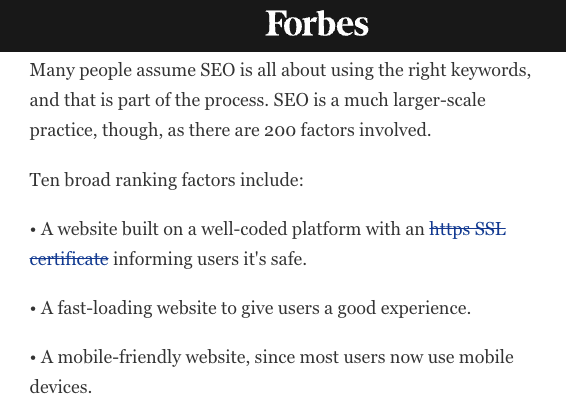
The writer of the article has included a contextual link to another website that provides more information about SSL certificates.
These links typically satisfy editorial requirements to back up certain statements with other relevant expertise and/or research.
In the news world, this is particularly important as journalists have to show trustworthy sources for their content.
You might notice a theme here in the terms I’ve used: Expertise, Authority, Trust.
When a well-known news website adds an editorial link to an article, it passes on some of the trust, authority, and expertise to the target website.
That type of link juice is highly valuable to improve your E-E-A-T and gain a better standing in search engines.
When it comes to high-quality links, editorial ones are right up there with the best possible ones and should be part of every quality link-building strategy.
Editorial Links Vs. Other SEO Strategies
While all good-quality backlinks have positive effects on your search results, there are some subtle differences between editorial links and other backlink methods.
These are some of the most common types of backlink methods:
- Guest Posts
- Private Blog Networks
- Niche Edits
- Broken Link Outreach
All of them can land you great-value contextual backlinks and more organic traffic, but there is one key difference with editorial links.
When you get a backlink from a major news outlet, it sends massive trust signals to search engines. Now, you can’t measure EEAT, but I have seen massive results on sites that got stuck in the SERPs after adding more editorial links.
Key Benefits Of Editorial Links
The ultimate goal of every link-building strategy is to increase rankings in search results, but there are some distinct benefits associated with editorial links.
-
Low Google Penalty Risks

You don’t have to resort to black hat link-building techniques to risk a Google penalty of some sort.
However, my 10+ years of SEO experience have shown me time and time again that editorial links are among the safest ones you can get.
It’s mainly down to the fact that editorial links from well-known news sites will make your website seem more trusted and authoritative.
There’s also the link diversity benefit that you gain, which makes your backlink profile look more natural and draws less suspicion from search engines.
One thing to keep in mind when you build links of any type is that you have to focus on quality.
2. Highly Authoritative Websites
Now, you might not be able to land high-quality editorial links from Forbes or Men’s Health right away, but even smaller news websites and industry-specific magazines often provide plenty of topical authority.
There are a few things you need to look at for potential news sites and online publications to determine whether they are authoritative:
- Backlink profile with links from other news sources
- The anchor text profile
- Location sources of organic traffic
- A mix of organic, paid, and social media traffic
- Number and experience of contributors
You’ll need to use SEO tools like Ahrefs, Moz, or SEMRush to do this analysis, but it will help you weed out sites that just look like news outlets.
3. Great Option For Branding Efforts
First of all, I should say that it can be difficult to get an exact anchor text on editorial pages. Some news sites will only give you a branded link that is either your company name or the website’s URL.
However, such inbound links with your business name and/or URL from high-authority sites have a great impact on your brand recognition.
Not only do the readers of the article get to see your brand name, but search engines also start to recognize your site as a trustworthy brand.
Let me now show you a proven strategy that will help you land the best quality links possible.
Proven Editorial Linking Strategy
Here are the steps I suggest you take to ensure you don’t waste time, money, and effort in buying links or doing editorial outreach.
Create Link Worthy Content
You can’t just start with crappy website content and expect to get good results from an editorial link-building campaign.
If your content isn’t link-worthy, then even smaller news websites will simply reject any request for an editorial link.
What this means is that before you even start buying or researching these link opportunities, you’ll have to invest in great content for your site.
Either you need to write it yourself or hire someone to do it; the important thing is that it has to be high-quality and unique–not just some topic that has been regurgitated a million times in your niche.
Create Original Research
Another option that works extremely well is to publish original and unique research. Let’s say you’re in the health and diet niche; then you might want to do some reader outreach with a questionnaire about certain diet aspects.
Make those questions unique, and then compile that research into data that you can share on your site.
Journalists and editors love referencing new research as long as it’s original, interesting, and up-to-date.
Run PR Campaigns
It’s generally a good idea to include a PR campaign in your editorial link-building efforts.
This involves public relations or press releases that summarize an article or piece of research you’ve done (see the above two steps).
You want to aim for high-authority websites to get press releases from. There are many cheap service providers that promise dozens of links, but they won’t be worth it.
Spend a bit extra on a PR campaign, as it’s a good reference data point to highlight in your editorial outreach efforts.
Implement Outreach Methods To Journalists

One thing I have found with editorial links is that it’s a lot more difficult to get to the site owner or people in charge. There are lots of gatekeepers in your way, and you may need to work through them before you get a link.
Don’t limit your outreach to just the editor of a site–instead, try to contact as many journalists and contributors as you can to see if they would be interested in referencing your article or research.
Make Quality Central To Editorial Link Building
The above process will help you generate editorial links that come from great-quality sites.
What I would add here is that your process should result in eliminating more sites than you shortlist for your outreach efforts.
Buying these types of links can be time-consuming, but the benefits for SEO and brand-building will make a huge impact on your marketing efforts.