Press releases or public relations backlinks, aka PR links, tend to be one of the strategic SEO tactics that many people both underestimate and often get completely wrong.
It’s not just a link scheme where you try to get a backlink from any random news or press website.
Those methods of just accepting any kind of news site can have serious negative effects.
It’s also a method that has more wide-ranging benefits than just keyword rankings.
What I want to show you in this blog post is exactly what we mean by high PR backlinks, what quality factors you need to focus on, and why so many people fail with this approach.
Let’s start with clarifying some definitions.
What Are PR Links?

High PR backlinks are links that come from public relations or press release content on designated news websites.
Businesses of all sizes and in all industries use public relations campaigns to publish information about new products, services, or for general announcements. The added benefit is that it’s an effective link-building strategy that can also drive referral traffic.
A common misunderstanding is that the PR stands for PageRank.
Google used to publish a website metric called PageRank, and it’s a fundamental part of the search algorithm patent.
While Google stopped publishing PageRank for sites, it’s wrong to assume that it’s no longer relevant. But, SEO specialists and researchers simply can’t claim that they know what the PR of a website is.
In the context of PR backlinks, this is not a metric you should focus on because it’s a complete guessing game on which sites have a high PR value.
Yes, there are website scores like Moz’s domain authority, but you have to be careful with these as well.
More on this shortly.
Now, let’s look at why you should build links through PR campaigns.
Benefits of PR Backlinks For Search Engine Optimization
When you buy high-quality backlinks through press releases, there are several benefits you need to be aware of, and all of them will impact your organic traffic.
Improved Search Engine Rankings

Contextual backlinks from press releases on well-known and trusted news websites directly impact the way search engines look at a site.
In a way, it’s like a guest post, as you have a direct influence on creating high-quality content that is relevant to your niche with some flexibility on the anchor text.
There might be more effort involved, and getting the ideal high-quality links can be more expensive than other SEO strategies–but my experience has shown me that it takes fewer links, and the effects can be impressive.
Focused Branding Strategy
Another benefit you have to be aware of when planning a PR linking campaign is that it’s an opportunity for you to strengthen your brand recognition with the public and search engines.
First of all, when people read a press release that contains your business name or the URL to your site, many of those readers will then search for the business name to see what it’s about.
Secondly, search engines notice that authoritative news websites are linking to your site and mentioning your business name.
It’s a subtle hint that there’s a trustworthy site with a real business behind it.
Diversified Backlink Profile
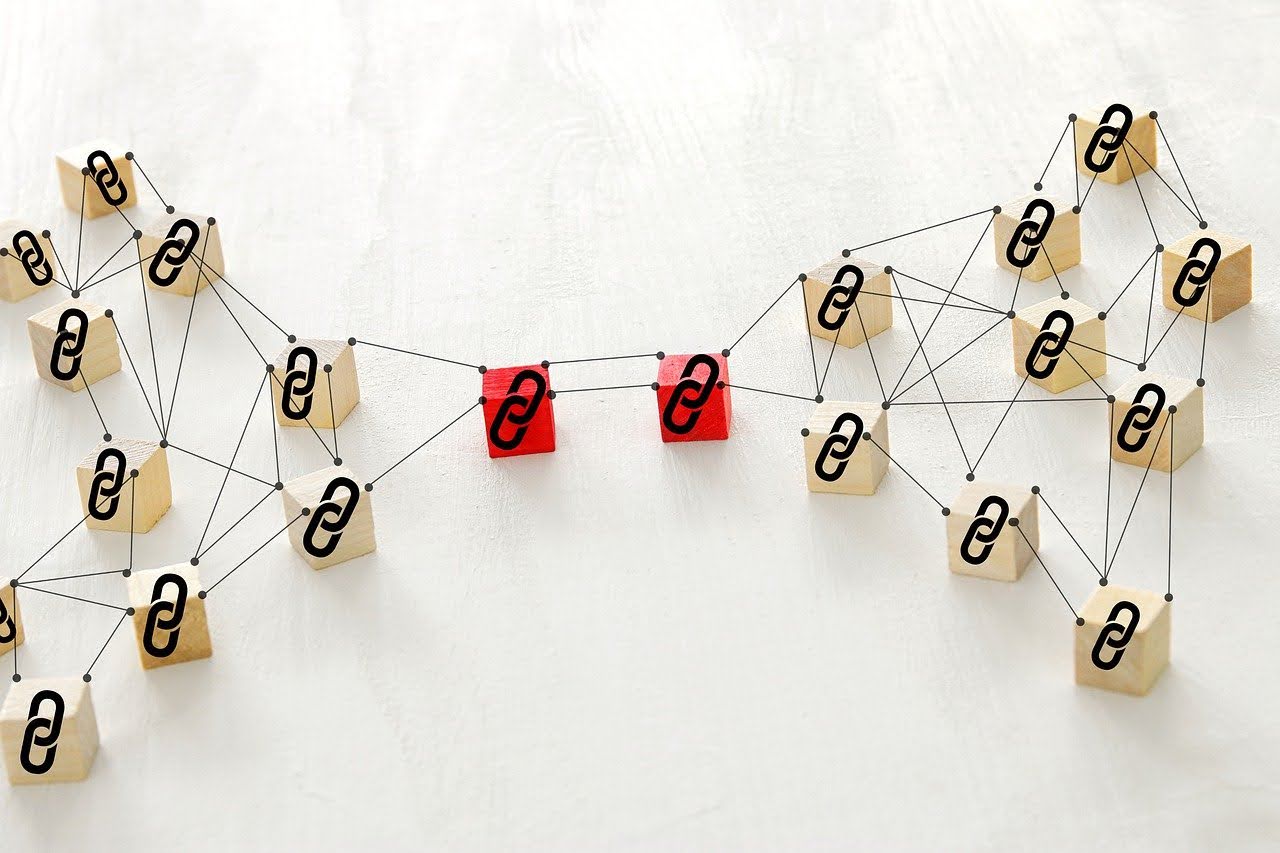
Quality backlinks from news and magazine sites also add great diversity to your backlink profile, which is a significant challenge for every SEO strategy.
In my 15 years of doing SEO, I’ve seen many people fall into the trap of finding a backlinking method that is fast, easy, and reasonably cheap, only to then stick with that method.
Unfortunately, that can become a detectable footprint, and that’s why SEO experts recommend a diverse link profile.
Yes, there’s more effort involved, and you might have to reallocate some of your SEO budget to buy these PR links, but the long-term benefit of avoiding penalties is invaluable.
How To Find High-Quality Backlinks
In this section, I want to show you what’s involved in finding and buying high-PR backlinks that meet my strict quality standards.
Analyze The Backlink Profile
To properly analyze backlinks to a site, you’ll need a tool like Moz or Ahrefs. These provide lists of backlinks, anchor text, domain ranking or authority, and other metrics that help you assess how valuable the links are.
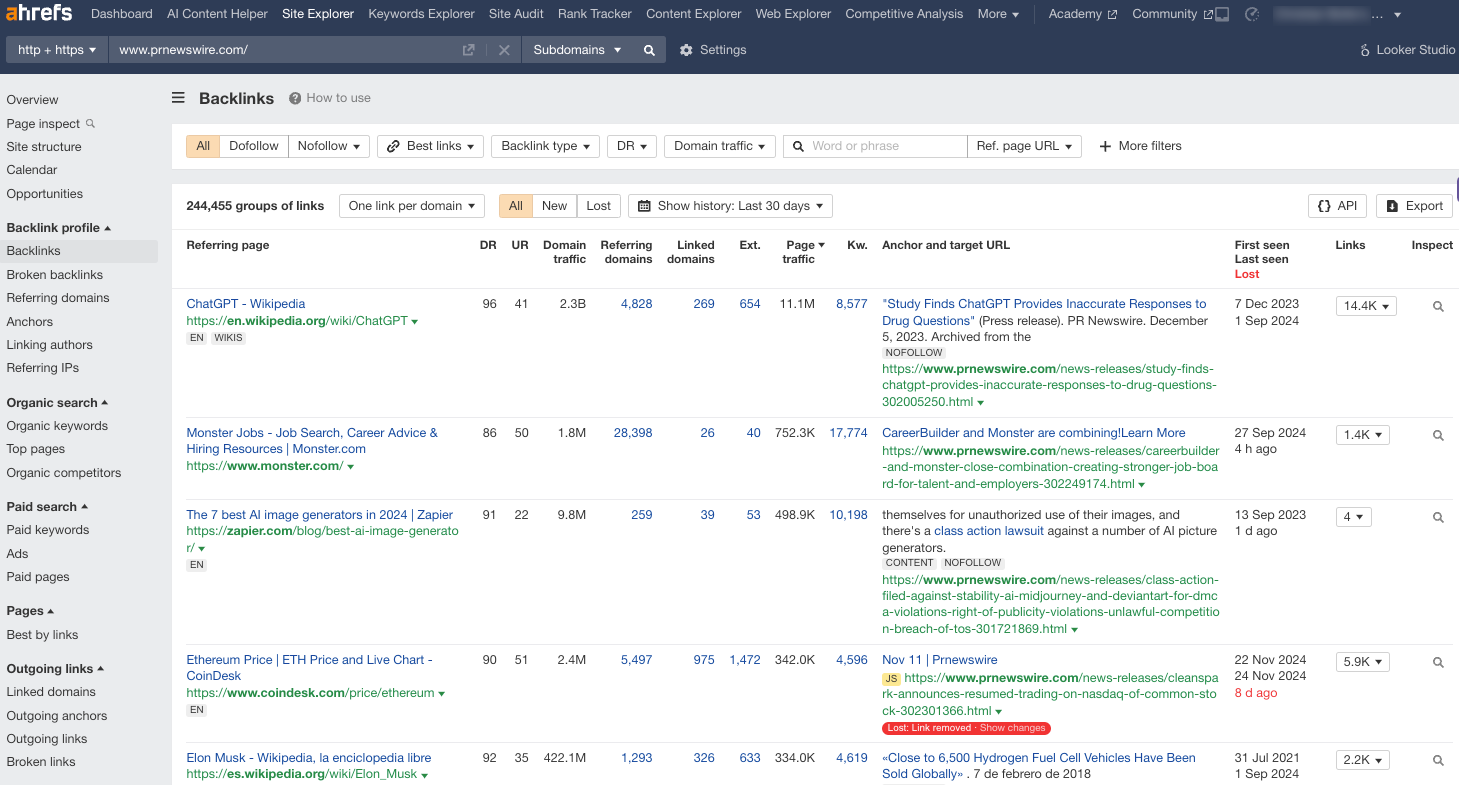
It’s time-consuming but vital that you do comprehensive research into the backlinks and ask yourself these questions:
- Are the links coming from relevant websites or just random sources like poker, pills, and porn sites?
- Is there an abnormal amount of foreign language anchor texts?
- Do other credible news websites link to articles?
- Are there over-optimized anchor text variations?
- Does it look like there are tons of spam sites in the backlink list?
- What is the average domain authority of the backlinks?
The more often you do this exercise, the faster you’ll identify the most obvious warning signs, and you should not buy backlinks from sites that have any kind of red flags.
Pay Attention To Content Quality
In order to verify content quality, you’ll need to look at more than one web page on a news site. You also need to dig deeper than the articles that the home page internally links to–those might just be the preferred showcase articles.
Start looking into the archive of news articles and analyze the quality of the language and what kind of sites they are linking to.
You’d be surprised how many “news” sites masquerade as legitimate sources but, in fact, have tons of PR articles about gambling, dodgy diet pills, and porn.
Getting a link from such sites might actually hurt your rankings in search engines.
Check The Traffic Sources
The first thing I’d say is that you can’t afford to just look at the volume of organic search traffic. Yes, it’s a good indication of how well a site is doing, but there are two flaws in that approach.
First of all, a site with natural diversity from organic, paid, and referral traffic is a good indication that there isn’t any over-optimization or manipulation of traffic data going on.
Secondly, just looking at the numbers doesn’t tell you whether that traffic is coming from a country relevant to your website.
Even if a site is in English, there could be a majority of traffic coming from Asian or African countries.
That’s fine if you’re targeting those countries, but not if you’re in the USA.
Ask For Quality Guidelines
Quality backlinks aren’t just tied to the site’s backlink and traffic sources but also to the above-mentioned content quality.
One tip I would share here is that during your outreach efforts, you should ask for documentation about content quality guidelines.
This should include things like:
- Wordcount requirements
- Reading level of visitors
- Image placement
- Grammar and punctuation instructions
- Paragraph length
- Allowed anchor text
If a site owner says they don’t have such guidelines, then that should be a big red flag; all the high-PR backlinks that I’ve ever built came from sites with very strict guidelines.
Avoid Cheap PR Services
There is always a temptation to keep your costs down, but when it comes to link-building services, cheap generally means low-quality and often spammy websites.
Here’s a reality check for you.
High-quality news and magazine websites can demand high prices because of the effects they know they provide through backlinks.
Whether it’s a PR article or a guest post, you have to expect to increase your budget.
I would take one great PR link over 10 cheap ones all day long, as I know how much value that one link can bring in the short and long term.
Are There Any Risks With This Strategy?
There are always risks with SEO techniques, but the trick is to reduce those risks to a minimum. However, when it comes to buying high-PR backlinks, I would highlight three distinct observations I’ve made in the last 10 years.
Does Google Punish Paid Links?
Technically speaking, Google’s webmaster guidelines say that you should nofollow paid links. Of course, that would completely negate any SEO benefit and the effort and money you put in.
Realistically, unless you use really cheap link-building services, news and PR websites don’t make it obvious that a press release or guest post link is paid for.
I have encountered many sites that put that information on every single page or in the footer of the site, and that’s something you should avoid at all costs.
Otherwise, you’ll make it obvious for Google bots or manual reviewers to identify that you’ve paid for links leading to algorithm or manual penalties.
Risk Of Low-Quality Links
I highlighted above that backlink and anchor text profiles tell you a lot about the quality of the website from an SEO perspective.
Buying links from sites with a dodgy profile that simply doesn’t look natural for a PR, news, or magazine website might give you a short-term boost–but you’ll quickly find that Google algorithm updates catch on to these sites, and you tank your search rankings.
Risks Of Poor Web Page Content
Similar to the backlink quality, links from a site with tons of really poor-quality content, like crappy AI or spun content, or written by someone with very poor English, can severely hurt your SEO efforts.
Search engines have been clamping down on quality standards a lot and Google has made it a core part of its mission to improve the content quality it delivers to users.
If you fall into the trap of paying for a PR campaign on sites with poorly written content, then it could come back to hurt you with another Google update.
Never Cut Corners With PR Link Building
The number one thing I want you to take away from this blog post is that you should never ever cut corners when it comes to quality control on high-PR backlinks.
When I consult on other people’s SEO campaigns, nine times out of ten, their biggest issue is that they have lowered their quality standards.
It’s a huge temptation and an expensive lesson I learned early in my career.
If you follow the above advice for buying links, you’ll future-proof your SEO efforts and avoid the most common search engine penalties.