One thing many SEOs still underestimate is the amount of damage a backlink strategy can have on websites.
With new Google updates coming faster than ever before, it’s also clear that you simply can’t afford to let a lack of planning be the cause of all your SEO efforts being for nothing.
What I’m going to show you in this blog post is how the right approach to buying high-quality backlinks might cost more time, effort, and money - but that approach can also save your backside.
We’ll look at clear definitions of quality, different types of strategies, how to analyze sites, and a step-by-step guide to buying links with an added safety net.
Let’s look at some basics first.
Definition Of High-Quality Backlinks
Getting a group of SEOs to define quality links will probably result in a huge debate, with everyone having “expert” knowledge.
However, through over 10 years of doing SEO and testing countless link-building processes, I have found that there are two areas where quality is most important.
All of the most valuable backlinks I have ever built have these in common.
-
Domain Authority
SEO tools use their own metrics to determine how authoritative and trustworthy a website is. Ahrefs calls it Domain Rating, while MOZ has Domain Authority, and Majestic has Trust Flow.
They all do a good job, and you just have to pick one that works best for you.
I personally like Ahrefs, but ultimately, they all give you a reasonably good indication of how authoritative a site is.
Generally speaking, the higher the authority score is, the more search engines like Google will trust the site as a valuable source of backlinks.
It’s what we like to refer to as link juice, and you should always try to maximize it.
-
Topical Relevance
Building links on high-quality websites isn’t enough, though. Link-building also has to look at whether a website is topically relevant to your own website.
For example, let’s say your site is about e-scooters, and you’re buying backlinks from a high-quality site in the home renovation space; that can turn out to be wasted time and money.
It could even harm your SEO efforts.
Now, you don’t have to get links from exactly the same niche or industry as your website. But it has to make sense that a site would send a backlink to you.
Going back to the e-scooters example, you could aim for paid links from gadget, fitness, and travel websites, to name a few.
1. Contextual Anchor Text

The final thing that impacts the quality of paid backlinks is the anchor text, location, and follow status of the hyperlink itself.
Whether you’re buying a guest post, press release, citation, or PBN link, you should receive instructions about the type of acceptable link.
What you want to get is a dofollow backlink that appears within the content of the page and some flexibility around what the anchor text can be.
Generally speaking, purchasing backlinks that don’t match these three categories can be a waste of time and money.
And they might even cause problems with future Google updates.
Benefits And Risks Of Paid Link Building Strategies
Let’s now turn our attention to the benefits and risks of buying backlinks.
Yes, there are risks, and you need to be aware of them to avoid the common mistake of cutting corners in your link-building process.
Increased Exposure In Search Engines
Building quality backlinks has two impacts on your website’s presence in search engines.
Firstly, the more high-quality links you build, the further up in the search results your site will climb.
No matter what “experts” say, Google is still highly dependent on analyzing links, and it’s a core part of the search algorithm’s patent filing.
Links matter, and quality backlinks matter even more, with Google having become increasingly smart about weeding out crappy and spam links.
Secondly, getting links from relevant websites while targeting keywords that have rich results in the SERPs can increase the amount of space Google dedicates to your website.
You’ll sometimes hear people talk about rich snippets, which are basically the same. Essentially, rich results or snippets refer to any kind of SERP feature that isn’t an advertisement or standard organic result.
There’s the map pack, knowledge pack, product listings, and even simple star ratings. Here is an example from Google's search results.
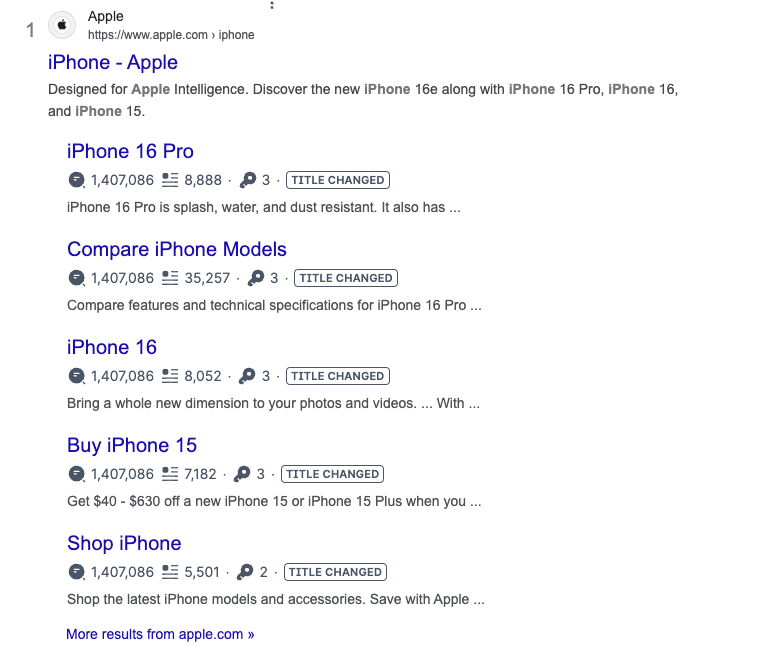
The more trusted your site is, the more likely you are to capture one of the rich snippets, which will increase your click-through rate.
Organic Traffic Boost
With higher rankings and more exposure to digital real estate in the form of rich snippets come more visitor clicks to your website.
But an organic traffic boost can be temporary if you’ve been purchasing backlinks that are easily identifiable or low-quality.
I’ll get to how you identify quality backlinks shortly, but I’ve seen it countless times where people have ruined years of work by cutting corners in their link-building practices to save a bit of money and time.
Referral Traffic Boost
This is a completely underrated benefit of building links on relevant sites. If you get a backlink on a topically related website with real traffic and active readers, and the link is embedded in a valuable resource, then readers will click on that link.
I’ve seen some guest post link building efforts result in hundreds of daily visitors because site owners promoted the content, and it started ranking extremely well.
Search Engine Penalties
Actively building links of any kind comes with a certain amount of risk. Maybe Google’s existing algorithm identifies the links as dubious, or maybe a future update picks it up.
Ultimately, it’s quite common to hear people completely lose it after Google updates when their sites rank due to an algorithm penalty.
However, if you focus on weeding out site owners who sell links that don’t meet certain quality standards, then you can avoid this problem.
More on how to identify low-quality links shortly.
Google Spam Guidelines About Paid Links
Technically speaking, Google’s spam policy says that buying links goes against their guidelines unless you set the link to nofollow.
I know, a nofollow link would be completely pointless.
Here’s the thing, though: with all search engines reliant on judging websites by their backlink profile, they have to be very careful how they assess those links.
Unless a link is on a site that clearly states that posts contain paid links - you should be avoiding those at all costs - it’s quite difficult for an algorithm to determine whether site owners sell links.
It’s certainly possible that Google gradually creates a list of blacklisted PBN and guest post sites, but that would require a lot of manual effort and is still a highly flawed and risky process.
For a business that is reliant on a highly sophisticated computer algorithm, that’s an unlikely scenario.
And, most importantly, if you focus on getting high-quality links from site owners who go the extra mile to protect their assets, then you should be limiting the risk to near zero.
That leads me to an important section.
Identifying High-Quality Backlinks
Buying backlinks has to always focus on quality, but most people simply don’t pay enough attention to this, or they misunderstand what quality actually means.
Having worked in search engine optimization for over 15 years, I’ve come to learn a few important lessons.
And I can summarize them in these five quality priorities.
1 - Backlink Sources
The first thing you need to do before buying backlinks is to look at the links pointing at the website.
There is no shortage of tools that allow you to do that, and whether you prefer Moz over Majestic or Ahrefs really doesn’t matter.
I personally prefer Ahrefs as I’ve found it to be the most valuable resource for the number of backlinks.
Here’s what a backlink report looks like.
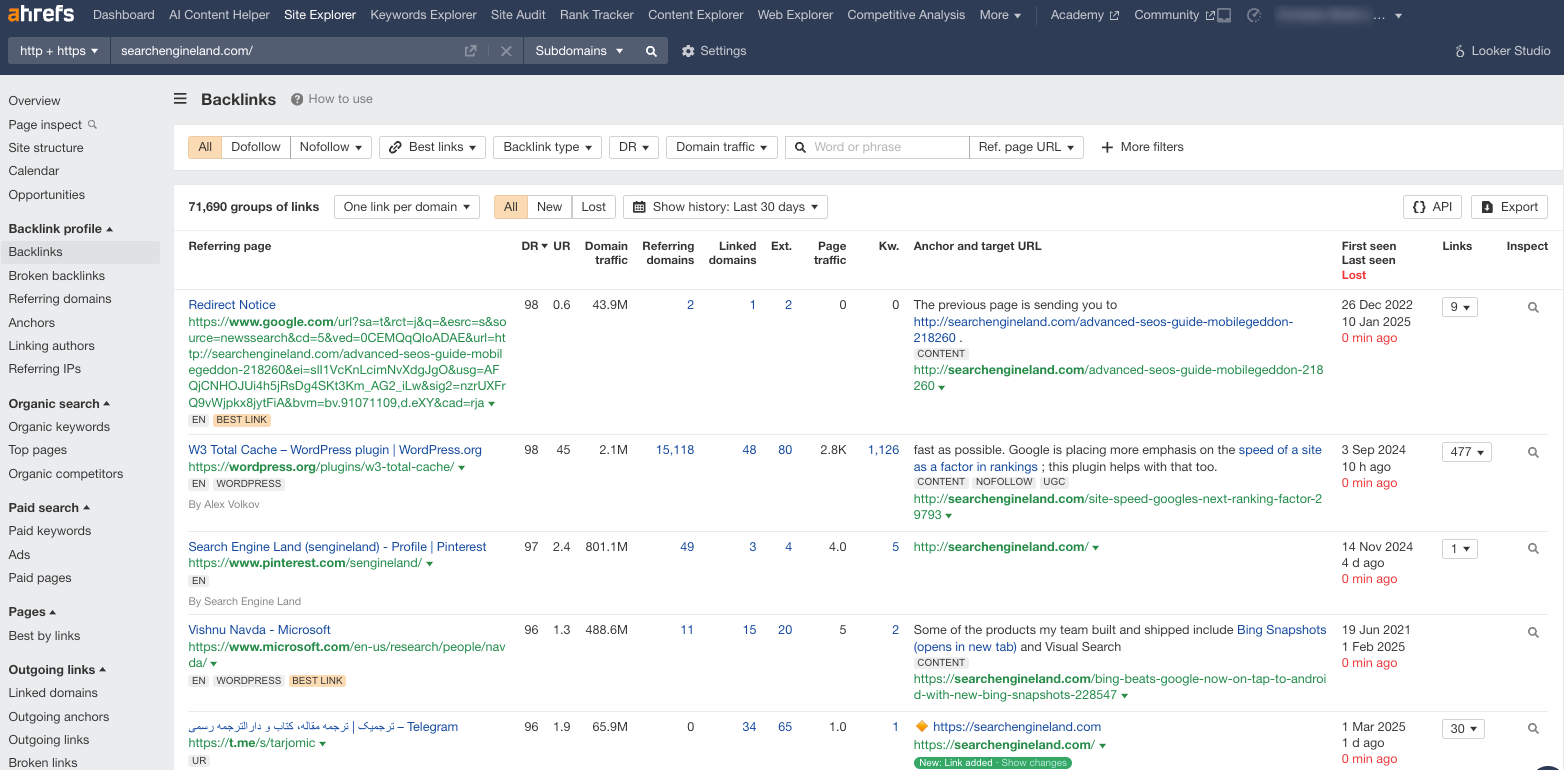
The tricky part is going through all the links and assessing whether they look legitimate. You can base your analysis on the DA/DR values and whether the domains are legitimate businesses and resources.
The longer the list of links is, the longer it’ll take you to figure out if a large part of the profile is made up of low-quality links.
Only consider paid backlinks from sites that have a legitimate-looking backlink profile.
2 - Backlink Anchor Text
Using the same tools as in the previous section, you also need to look at the overall anchor text profile of the links pointing at a website.
Here’s what that report might look like.
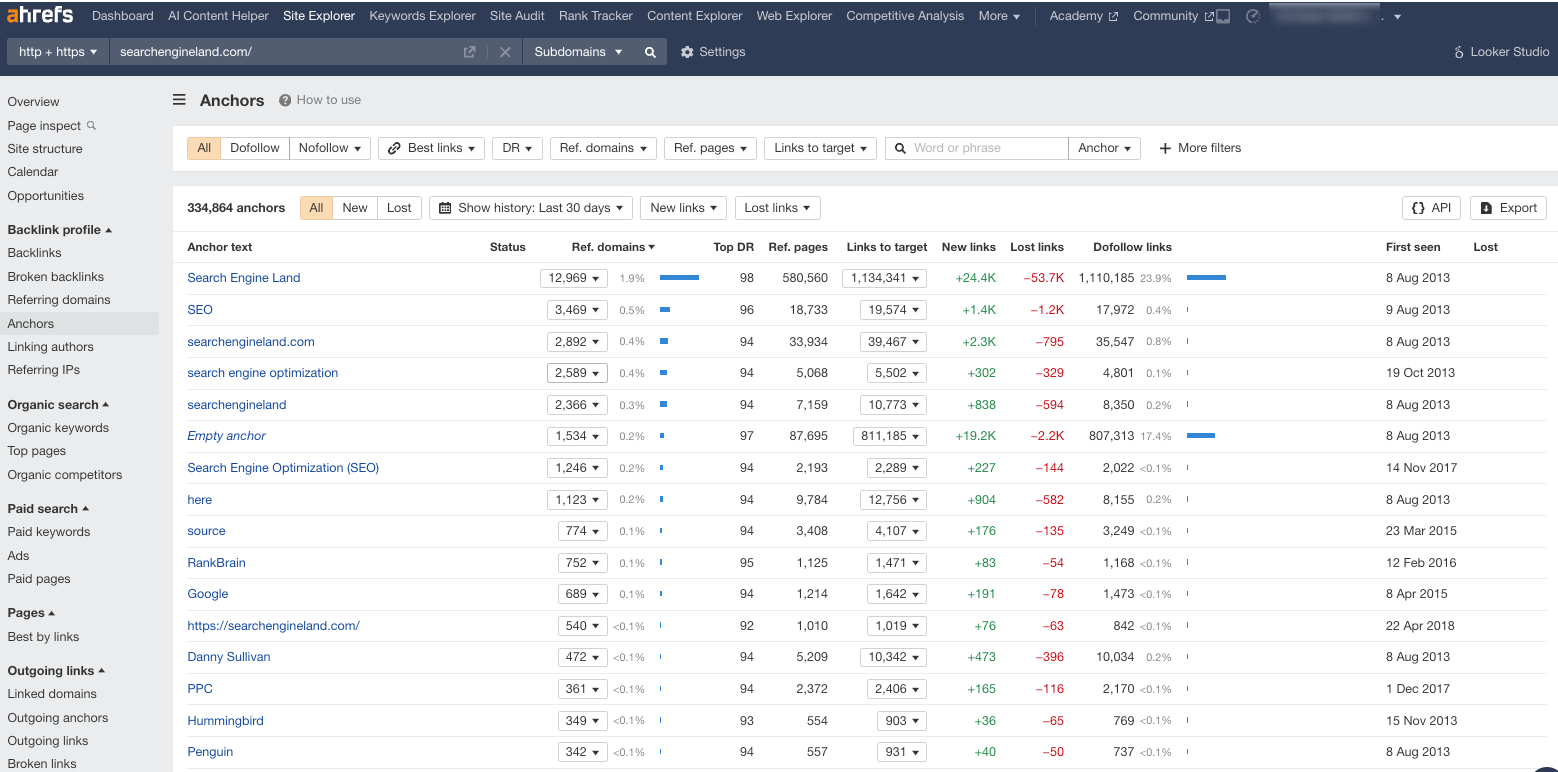
Site owners sometimes try to game the algorithms and, in the past, have used keyword stuffing techniques in their own link-building strategy.
That often resulted in over-optimized anchor texts where a large percentage are for exact-match keywords.
That’s a big red flag and one that Google addressed a long time ago.
What you need to look for is a large percentage of branded or URL anchor text, followed by a broad mix of different keywords and simple things like “click here” or “find out more”.
The more varied and natural the anchor text profile is, the safer a PBN or guest post link will be.
3 - Traffic Sources
You can also use SEO tools to determine where traffic is coming from.
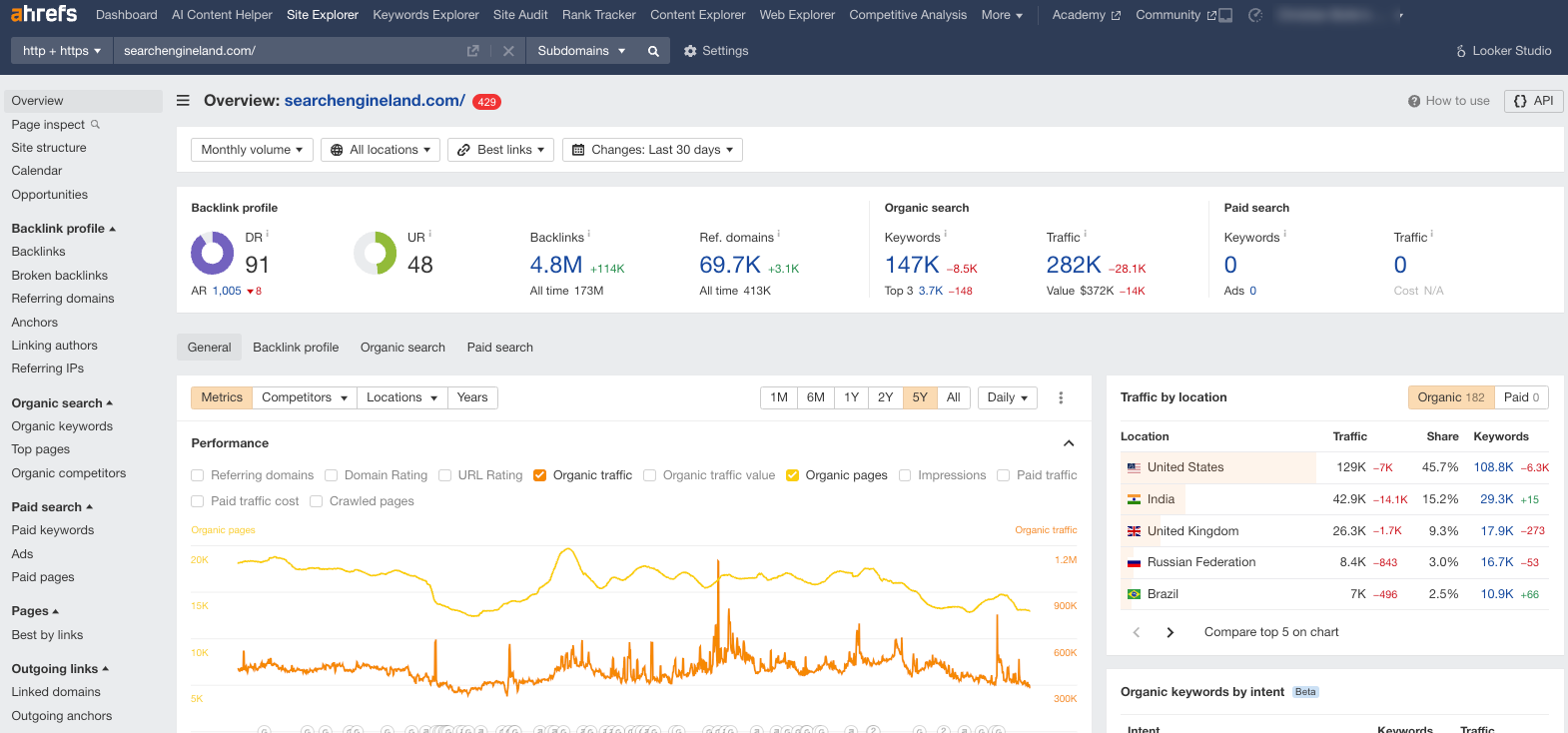
This is a vital step in your analysis, as many site owners are a bit shady about the topic of site traffic.
See, it’s very common for SEO services to provide information about total traffic stats. The idea is that the more organic traffic there is, the more “real” the website looks to Google.
Here’s the problem, though.
If all of that traffic comes from countries completely irrelevant to your own target country, then a guest post on such a site will be less valuable - maybe even damaging.
What you need to look for is the majority of traffic coming from the same country you’re targeting, with the remaining countries at least making sense.
4 - Topical Authority & Relevance
Another important factor in your quality assessment has to be the overall topical authority of a site.
Let’s say your link-building research has brought you to a legitimate site with great links, anchor text, and traffic stats.
If that site has topical authority about DIY and power tools, but you’re trying to rank a site about baby strollers and equipment, then you’re struggling to bridge that topical gap.
It could even be too obvious that you’re buying backlinks in such a scenario.
What you want to see is a website that is ranking for many keywords related to your website, as this will indicate both relevance and authority.
Paid links from sites like that are worth paying extra for as they future-proof your link-building and limit risks.
5 - Content Quality
The final piece of the puzzle involves analyzing the content on a site for potential paid backlinks.
Here’s how I approach it.
I first look at all the pages directly linked to from the homepage, but those are typically the ones site owners want you to see.
What’s far more interesting is the content that is a bit deeper down.
You’re looking for high-quality content across the board, whether it’s a high-traffic and ranking page or not.
Often, you’ll start to uncover low-quality AI content.
More on that below.
Cost Of Quality Links
No matter what task you look at in an SEO campaign, cost is always a difficult one to address.
The reason is that there are such vast differences in service costs, whether you’re looking for content, on-page optimization, or buying backlinks.
Yes, you can get a backlink in a crappy blog post on a dodgy site for less than $10. But I can tell you now: that link will provide practically no benefit and put your site at serious risk.
When it comes to high-quality backlinks, you simply can’t be looking for a cheap way out.
Here are some examples from my years of experience.
Top-quality PBN links will put you back $40 to $80.
Guest posts on authority sites and highly relevant real websites with real traffic will cost anywhere from $100 to $600.
A lot of factors come into play, like content quality, length, editing, backlinks, niche, etc., but those guidelines should give you an idea of what to expect when buying backlinks.
Effective Link-Buying Strategies

You’ll often hear people talk about white hat and black hat SEO to describe different techniques and strategies.
The strategies I follow and recommend are generally classed as safe white hat SEO, although some people in the industry will still say that buying backlinks isn’t white hat.
I’m not going to waste time arguing about this; from my experience, the following are safe link-building options as long as you make quality your top priority.
Guest Posting
Guest posting essentially involves buying backlinks on other websites by providing a new blog post with relevant content.
Having used guest post techniques for over 10 years now, I can tell you that it remains the safest way to build natural-looking backlinks.
As long as the guest post site has great backlinks, content, and an active audience, buying links in this way looks completely natural.
Bloggers constantly add content with links to other sources, and as long as they don’t advertise that posts and links are paid for, they are basically undetectable by search algorithms.
Niche Edits
Many bloggers also sell links that they embed in existing content, also known as niche edits or link insertions.
Essentially, you’re editing a blog with existing keyword rankings, age, and traffic, which can increase the value of the link and the time in which you see results.
There is a temptation to only focus on niche edits, but that would be a big warning sign for Google. It simply wouldn’t be natural for a website to get lots of backlinks only through niche edits.
So, when it comes to planning your backlink strategy, make sure you mix things up.
Homepage Links
Links on a homepage are among the most powerful you can consider when buying links.
The reason is that most of a domain’s power and link juice is associated with the home page. When you go deeper into a website, you lose some of that power.
So, getting a permanent backlink on the homepage of a powerful domain can provide game-changing SEO results.
However, just like with niche edits, you need to be careful not to overdo buying just one type of quality backlinks.
Private Blog Networks
The final option for buying backlinks that I recommend is private blog networks, or PBNs. These are typically sites that SEOs set up on expired domains.
But here’s the thing.
Many SEOs set up extremely basic PBNs that you can immediately identify. They’re typically sites with default WordPress themes and plugins, and even the default tags and categories are in the sidebar.
However, PBNs set up and managed to look like real websites are extremely powerful, and buying backlinks from premium PBN providers can be a good option to add to your overall strategy.
My general recommendation is to always mix it up between all four of these - it’s the best way to keep your rankings in the long term.
Buying Backlinks Safely: A Step-by-Step Guide

There are countless link-building services out there, and even more people are selling links in places like Fiverr and Legit.
Whatever you choose for buying links, make sure you go through these steps to get good-quality backlinks that stand the test of time.
-
Choose Link Types
The first step in buying links is to decide on what types you want to focus on. You might want to go for a mix, and these are the types I mentioned in the previous section:
- Guest Posts
- Niche Edits
- Homepage Links
- PBN Links
Decide on how many of each type you need for a link-building campaign and then move on to step 2.
-
Choose Preferred Website Authority
You also need to choose what kind of authority level you want to aim for, which is typically defined as domain authority or domain rating.
Service providers typically track a site’s SEO metrics, but it’s generally worth checking this before you accept a backlink placement.
Domain authority can change over time, and things like Google penalties can significantly impact it as well.
-
Choose The Topical Niche
This is a critical step in buying backlinks. You generally want to make sure that you can choose what niche a website is in and ensure that it matches your niche.
There is some flexibility with this, but you need to avoid situations where you’re trying to rank a local insulation contractor by getting a guest post on a dog training blog.
If you’re in an extremely narrow niche, try to go slightly higher but still related or look for news websites that already have similar topics to your niche.
-
Choose The Traffic Volume
The next step involves choosing the traffic volume. Ideally, you want backlinks from sites with at least 1,000 monthly visitors, and the higher you set this value, the more you have to expect to pay.
But when buying backlinks, source website traffic is critical in making it look like you’re gaining naturally occurring links rather than trying to manipulate the algorithm.
-
Choose Limited Outbound Links
Another metric you should keep in mind is how many other websites a PBN or guest post site links to.
Obviously, very large sites will have a lot of outbound links, but you don’t want to see smaller sites with abnormally high outbound links.
This is even more important for the number of outgoing links on individual pages. The more links there are, the less link juice will pass through to your website.
-
Choose Content Parameters
The final part you need to look at is the content your anchor text will appear in. You need to think about the topic, the overall length, the style, and how well-written the article should be.
The longer the article is and the more specialized and optimized you want it to be, the more it will cost to hire someone to write guest posts.
However, the better the content is, the more likely it will be to attract reader engagement and rankings, and the more valuable the link will be.
Measuring The Effects Of Link-Building Efforts
This is an important topic that many SEOs often forget. There are three things you need to keep track of to evaluate the success of a backlink strategy.
Search Engine Rankings
The easiest way to track how buying backlinks impacts your website is to use a rank tracker for your main keywords.
Add the keywords you’re targeting in your anchor text to the rank tracker and then check how your SEO strategy impacts the rankings.
I’ve typically found that rankings can increase within 3 - 30 days after a link goes live.
I know it’s not a very exact timeframe, but that’s simply part of the game.
Organic Traffic
Ultimately, buying backlinks should result in higher rankings to drive up traffic. You should see increased traffic for the main target keyword as well as secondary and long-tail keywords.
One way to check whether you’re ranking for more keywords and getting more traffic from them is by using Google Search Console.
It contains graphs showing the number of total keywords, but you can also filter down to individual pages and see how it reacted to new backlinks.
It’s a powerful tool for precisely this reason, and all the data comes directly from Google.
Domain Authority
Buying backlinks should also improve your domain authority over time. You can track this in tools like Moz and Ahrefs, and I generally recommend sticking to one tool.
I would also say that you shouldn’t get obsessed about this metric - it’s an easily manipulated one and really isn’t the cause of higher rankings in search engine results pages or better traffic.
However, it’s still an additional data point to help you evaluate the impact of buying links.
Avoiding Google Penalties with E-E-A-T
When I analyze sites that got some kind of Google penalty, it typically comes down to a severe lack of E-E-A-T (Experience, Expertise, Authority, Trustworthiness).
Experience and expertise are things that come with creating lots of great content and covering every possible angle of a niche.
Authority and trustworthiness are more difficult to achieve and tend to rely on the quality of backlinks (here’s a great article on the topic).
One of the underlying reasons for a lack of authority and trust is that people buy tons of cheap backlinks, believing that by having more links, they’re getting more value.
Let’s look at how I approach the subject.
What Google Expects From Your Site
To understand what Google is looking for, you have to be familiar with the guidelines for creating helpful, reliable, people-first content.

These are the guidelines used for manual spam checking, and they revolve entirely around E-E-A-T.
Practically, that means you have to prove that you have experience and expertise on a topic by posting a lot of high-quality content that satisfies what people are looking for.
But you also have to prove that you’re an authority and trustworthy on the topic. That’s where things get a bit more complex.
Let me explain.
The Value Of High Authority Backlinks
The only way you can prove that you’re a trusted authority on a topic is by having other people vote you up through backlinks.
Links from other authoritative and trusted sites are like votes in favor of you. But if you’re only getting cheap backlinks, that sends a powerful message to Google, and it’s not a positive message.
However, if you focus on a guest post strategy that aims at landing links on highly authoritative sites, you’re sending the best possible message to improve your trustworthiness.
AI-Generated Content and Its Impact on Backlinks
There has been a lot of hype around AI content, and there’s an equal amount of misunderstanding of what AI is and isn’t capable of.
Yes, you can have AI agents create thousands of words of text every minute - and Google has said that they accept AI-generated content in search results.
But what Google hasn’t said is that they will accept every kind of AI content.
Let me explain.
Quality Vs. Quantity
It’s possible to generate hundreds of thousands of words for blog posts and then publish them all over a few days.
Instant expertise and experience, right?
Actually, there’s a lot wrong with that approach.
The SEO industry jumped on using AI for creating content, assuming that they would get great content just because there weren’t grammar, spelling, or punctuation issues.
However, getting AI to consistently produce content that isn’t repetitive and satisfies Google’s E-E-A-T guidelines is not so easy.
Essentially, what many people assume is that if they post enough cheap AI content, the quantity will make up for the lack of quality.
However, Google has repeatedly made it clear that its main focus is quality.
Many link-building services immediately jumped on this approach as well, which could have a significant impact on the link juice.
Time And Effort
Creating high-quality content wth AI is possible, but not by issuing a simple one-line prompt to create a 2,000-word article on a specific keyword.
It takes a lot of prompts, and you have to break long articles down into smaller sections. And then it requires a lot of editing to humanize the content and remove topical duplication, which is very common.
The result is this.
Instead of having a big blog article in less than 30 seconds, you still end up having to spend a lot of time and effort editing the content.
The more you cut costs on this approach, the less likely your AI content will satisfy Google guidelines.
Building A Strong Foundation With Quality Backlinks
Buying backlinks is easy, but buying high-quality backlinks that future proof your search engine ranking is not that simple.
There’s no shortage of services offering low-quality and cheap links, but they’re more likely to harm your SEO strategy than help.
Your number one focus should always be to get the best quality possible.
That means some more effort in your research, and a higher budget, but the results will be reliable and consistent.
The more link opportunities backlink services you reject, the more certain you can be that you’re making the right decisions.