The health and fitness industry is one of the most active niches for blogging and social media, and in the 10-plus years of perfecting my guest post outreach method, I’ve learned how to approach this niche the right way.
I also learned the hard way that quality controls are more important in the healthy lifestyle and fitness niche than anywhere else.
What I’ll show you in this post is why this niche is different, my exact quality guidelines, and how different quality metrics influence guest blog pricing.
Reading this article is going to be time well spent if you’re looking for backlinks that won’t come back to haunt you in a future Google algorithm update.
What Makes Fitness Guest Posts So Unique?
The reason fitness guest blogging is different from pretty much every other niche has to do with three key factors:
- Providing health and fitness advice can impact people’s lives
- You’re potentially exposed to legal and ethical considerations
- There is a large overlap of topics and interests
Let’s take a closer look at each.
Special Attention For Health Information
The first thing I need to highlight is that anything related to Your-Money-Your-Life (YMYL) directly affects SEO. Ever since Google rolled out the so-called Medic Update, it has been increasingly difficult to achieve and maintain higher search rankings in this niche.
Essentially, Google decided that anything about health, exercise, diet, and medical advice should only be coming from trusted sources.
It’s not like you’re just giving a few friends some advice about your diet and yoga approach.
With a potentially huge audience of interested people, your advice will likely impact many people’s lives in different ways.
That’s why expertise and authority are critical factors you need to demonstrate on your website and through your backlinks.
More on that shortly.
Legal And Ethical Considerations

You might have the best intentions in your healthy lifestyle and exercise advice, but there are still legal and ethical considerations you need to be aware of.
You have to assume that your audience will read your content and then act on the advice. Whether it’s about healthy eating or creating good fitness habits, you have to show that you’re an expert and have done a lot of research.
That means you need to back up your claims in every article with credible research studies and not simply promise that your advice is credible.
Many Overlapping Topics
So far, I’ve highlighted some tough news about the health and fitness niche. Now, it’s time for some good news.
When it comes to diet, exercise, and general healthy lifestyle topics, there are tens of thousands of people actively involved.
There are thousands of logs dedicated to yoga, strength exercise, cardio, every possible type of diet, and supplement regimes.
And if you write about fitness on your website, then a backlink from pretty much any health-related topic will be a niche-relevant one.
While most people aim to find the highest authority backlinks possible, it’s important to understand that getting backlinks from a relevant niche can be just as important.
Let me now show you what a good guest blog approach will do for your website.
How Do Guest Posting Sites Help Fitness Blogs?
When you have a process for finding high-quality guest blog article sites, there are four areas where your website will benefit.
1. Search Ranking Improvements

The main reason that people write guest blog articles is to gain a backlink, and in my experience, this approach can be one of the most natural-looking strategies.
When you have the right quality control process to find sites and blogs that are a good fit, then the effects on your search rankings can be phenomenal.
My company has built over 150,000 guest post backlinks, and I can tell you that no other strategy has proven more resistant to Google algorithm updates.
Yes, there are risks with every backlink approach, but when you follow my quality guidelines, you’ll limit that risk to a minimum.
More on quality shortly.
2. Visitor Referrals
When you write a great quality article for a guest post blog that has a lot of daily readers, then some of those readers will follow the backlink.
That kind of referral traffic is highly valuable because they are interested in the blog topic and want to find out more.
As long as you can keep that interest fueled on your website, those readers can become regulars, returning every day or week.
The more active the websites that you reach out to are, the higher the potential is for gaining new readers and followers.
3. Gain Authority For EEAT

I already mentioned the concept of YMYL above and that Google treats bloggers who write about health, diet, and exercise differently.
EEAT (Experience, Expertise, Authoritativeness, Trustworthiness) is a concept that directly relates to YMYL, with authority being a critical factor.
Backlinko has summed up the authority part extremely well by saying it “Measures the extent to which the content creator or the website is known as a go-to source and is well-established and respected in the field.”
And how do you show that you’re a go-to source?
That’s right; the more backlinks you get from relevant websites, the more it sends a signal that the industry trusts the content you write.
4. Network With Bloggers And Influencers
This is one of the most undervalued benefits and one that many people completely ignore. When you find a good fit for guest blogging, don’t look at it as a one-and-done effort.
Aim to connect with the website owner on social media and exchange advice and ideas. Ask if they have friends and other connections in the SEO space and get a dialog going.
Many people in my circle of friends are connections I made through guest post outreach. And those friends can become immensely valuable in helping you succeed.
Key Risks Of Common Guest Posting Mistakes
In all the years I’ve been doing SEO and guest posting, I’ve encountered many people who claim that this strategy no longer works.
And every time I look at examples of links these people created, there’s a common theme relating to the quality.
Low-Quality Sites May Hurt Your Search Rankings
The single most common issue I’ve seen with people’s guest posting process is that they cut corners when it comes to the overall quality.
What I generally say is that during your research process, you should be eliminating more websites than you accept.
Whether you write about healthy eating, exercise, yoga, fitness equipment, or supplements, you have to gain trust and authority through your backlinks.
And low-quality websites can have the opposite effect and even tank your search rankings.
Google Tries To Catch Paid Guest Posting
Technically, any paid dofollow backlink is against Google’s guidelines.
In reality, it’s a lot more difficult for an algorithm to consistently identify paid guest blog links unless you make a very common mistake.
Many people who write and submit a guest article don’t check whether the owner publicly labels posts as paid.
Yup, there are plenty of blogs that highlight this fact, and those are easy for Google to identify.
Impact Of Toxic Topics

One of the oldest tricks in the book involves gaming a website’s traffic stats. This can be achieved either through having high-traffic toxic content relating to poker, pills, and porn or getting cheap traffic from countries not related to your target readers.
Even if you don’t get a backlink directly from within that kind of toxic content, it could be doing more harm than good.
At best, you won’t see any ranking improvement, and you’ll waste time, effort, and money.
My Quality Control Approach To Fitness Guest Posting
Here are some simple steps you should follow if you write about diet, exercise, or anything else related to people’s health.
The best part about this process is that they eliminate websites before you even start the outreach process.
Top Quality Web Design
Once you’ve spent a bit of time doing guest blog research, you’ll quickly know what I mean about identifying crappy web design.
Often, you’ll notice that someone simply used a free WordPress theme and made no effort to achieve a nice-looking design that is easy to navigate.
However, to become more effective at identifying designs that don’t follow commonly accepted best practices, check out this Elementor guide to 20 web design principles.
The more of these common design practices you see implemented, the better quality is, and the more you should be willing to pay for a link.
Engaging And Informative Content
The first thing I would say here is that you need to look further and deeper than the content you see on the homepage.
I’ve often encountered websites that have great content on the homepage and most popular list of blog posts. Only to find tons of dodgy content hidden under the surface–stuff like crypto, pills, and gambling are most common.
The reason people do this is to make their traffic stats look better than they are.
So, spend some time reading other published posts and check whether there is any credibility in the content.
Ask yourself these questions:
- Is the text engaging and interesting?
- Did someone with knowledge of exercise or healthy eating write the article?
- Is there community engagement with the content in comments or on social media?
- Are there scientific references to back up tips and recommendations?
You’ll quickly weed out blogs that are not a good fit using this approach.
Real People With Verifiable Credentials
To verify if there are real people behind a blog, you have to focus on their social profiles on Facebook and LinkedIn.
Use these questions to guide you through the process:
- Do they have a lot of friends with whom they interact?
- Do the friends regularly comment on their posts?
- Are they real friends or bots?
- Is there evidence of education in the health and fitness industry?
Once you spend a few hours researching people’s social media, you’ll basically develop a sense of fake profiles.
Backlink Profile And Anchor Text
Analyzing the backlink profile is a bit more tricky and requires tools like Moz, SemRush, or Ahrefs to filter large lists of backlinks with metrics and anchor text information.
Here’s what this data looks like in Ahrefs.
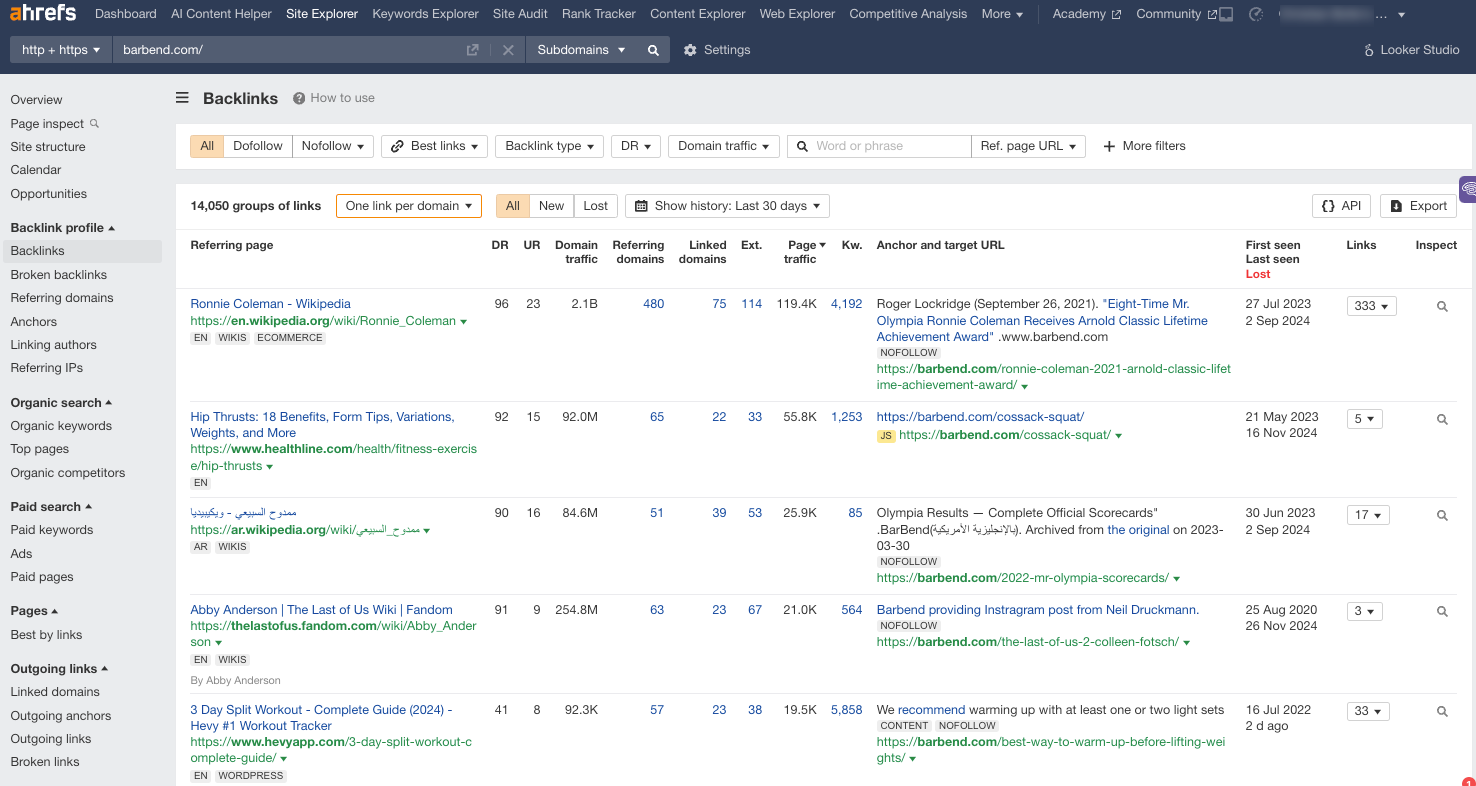
You’re potentially looking at hundreds or thousands of links, so you may need to take a scanning approach.
What you’re looking for is signs that there are a lot of links from unrelated domains, niches, languages, especially anything relating to gambling, pills, and porn.
Also, look at the anchor text and for signs that someone has over-optimized for high-value keywords.
Believe me, there are a lot of dodgy bloggers in the world, and their backlinks are usually one of the tell-tale signs.
Know How To Price Guest Posts

OK, so you’ve learned about my quality control process; now, it’s time to look at how these factors influence the price you pay for links.
Pricing Traffic Sources And Volume
One of your priorities should be finding opportunities where there is a lot of organic traffic from the same country you’re targeting.
Let’s say you have a website about strength training, and you have an opportunity to create a guest post on a website about healthy eating.
If there are thousands of daily visitors to pages about diet and eating coming form the same country you’re targeting, then that’s an extremely positive sign.
Opportunities like that are valuable, and you should consider raising your budget.
Pricing Backlink Quality And Authority
I described above how you analyze backlinks, and if you find a website with a lot of highly relevant and authoritative backlinks, then that authority will flow down to your website.
Most importantly, though, count the number of authoritative backlinks and make a list of them. The better these look, the more you should be willing to pay for the guest blog.
Pricing The Guest Post Placement
Here’s a vital factor in valuing a guest blog. It’s one thing getting a new post or page set up that contains your backlink.
But that backlink won’t be of much value if it’s on an orphan page (learn more about them here), meaning that there are no internal links pointing to it.
What you want to make sure you get is a guest post that has internal links flowing from the homepage to it. That way, you ensure that as much link juice passes on to you as possible.
I recommend finding out about internal linking before you write a post, and if you get positive news from the owner, then it’s worth paying more for the backlink.
Pricing Guest Post Promotion
The final thing you should factor into your budget is the cost of promoting the post. Some guest blog owners have active social media accounts and will even run paid ad campaigns for posts as an optional extra.
It’s well worth considering these options. And if they aren’t available, then consider promoting the article yourself through paid campaigns on different platforms.
This approach brings in potential social media links and makes it look a lot more natural.
Always Make Quality Your Top Priority
In all my years of doing SEO and guest posting, I have found that those people who shout the most about the negative impacts of this approach are always the ones who cut corners on quality.
My strategy has stood the test of time, and Google updates have not been able to mess with it.
If you implement my step-by-step approach, you quickly end up realizing that most websites are not worth it.
When that happens, you know you’ve got the right approach.